

 Polski
Smart Roads and Light That Remembers: Weekly Roundup
This week the lighting industry is looking in two directions at once: toward a new international standard for adaptive street lighting, and toward experiments by Polish physicists with materials that "remember" light. Both stories show just how closely lighting engineering, smart city control, and photonics now intersect. We start with global regulation and end up in a Polish laboratory.

01 · Smart City
New CIE standard brings order to adaptive road lighting [1]
The International Commission on Illumination (CIE) has published Technical Report CIE 258:2026, devoted to adaptive road lighting, known by the acronym ARL. These are systems that continuously adjust the brightness of street lamps to actual traffic on the road – the presence of cars, cyclists, and pedestrians – instead of shining at a constant, maximum level all night regardless of whether anyone is actually passing through [1].
The document describes three such systems already deployed around the world and summarizes the benefits they deliver. These are lower energy consumption, reduced CO2 emissions, and less light pollution, which negatively affects flora and fauna along roadsides. For street lighting designers and local governments, this is an important point of reference – the report is meant to provide consistent guidelines for implementing smart streetlight control, rather than leaving everyone to invent their own rules from scratch. In practice, this means smart city stops being a buzzword from a slide deck and becomes something that can be designed according to a single, internationally recognized standard [1].

02 · Photonics
A Polish light sensor with synaptic memory [2]
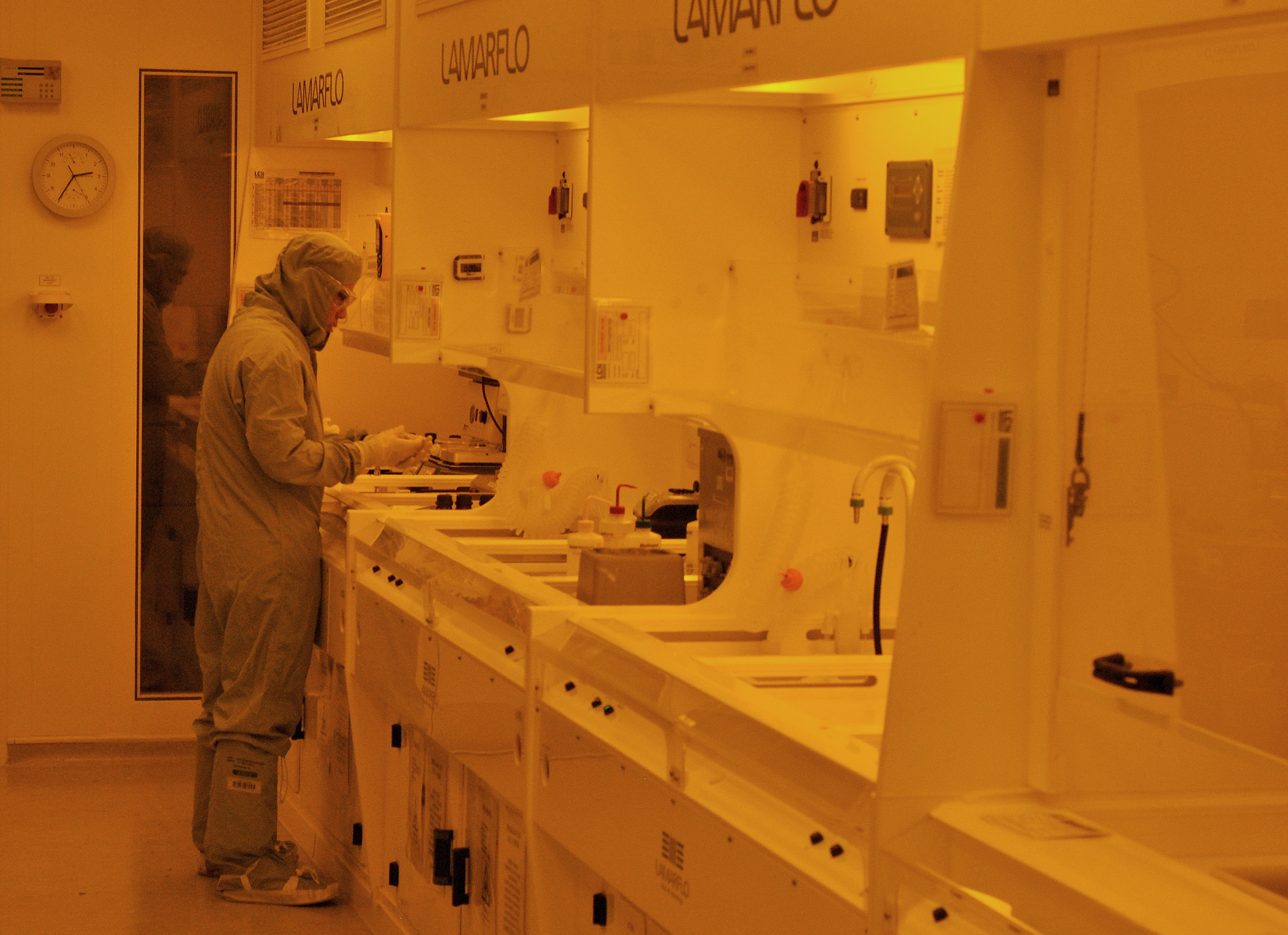
From a completely different, yet equally fascinating, corner of the world of light comes news from Poland. Researchers from Wrocław University of Science and Technology and the Institute of Physics of the Polish Academy of Sciences have developed an optical sensor made from thin layers of europium-doped zinc oxide. Its most intriguing feature is that after a flash of light, the material retains a "memory" of it – charges become trapped in structural defects and are gradually released from them, mimicking the behavior of short-term synaptic memory known from neurobiology [2].
That might sound like a laboratory curiosity, but it carries real practical significance. A sensor like this is a step toward cameras and detectors that begin processing part of the image information at the very moment it is captured, rather than only after the data is sent to a processor. The findings were described in the journal "Advanced Functional Materials." For the lighting industry, it's a good reminder that innovations in photosensitive sensors – even though they make headlines in trade media less often than new fixtures or controllers – could one day influence how we design vision systems that work alongside smart lighting, for instance in traffic monitoring linked to the adaptive lighting described above [2].
Summary
Summary
From a global standard for smart streetlights to a Polish sensor with material memory – this week shows that lighting today is far more than bulbs and fixtures. It's control systems, data, and photonics woven into a single whole. If you want to see where these technologies are headed in person, join us at Light-Tech Expo 2027 – International Lighting Fair, where designers, scientists, and manufacturers shaping the future of the industry will come together.
Invitation
Adaptive road lighting and sensors with material memory are just a preview of what you'll see at Light-Tech Expo 2027 – International Lighting Fair. There you'll meet smart city systems designers, controller manufacturers, and scientists working on the next generation of photonics. Come see live the technologies that are only just entering the market.
Light-Tech Expo 2027Footnotes
[1] LED professional — https://www.led-professional.com/all/new-cie-technical-report-cie-258-2026-adaptive-road-lighting[2] naukawpolsce.pl (PAP) — https://naukawpolsce.pl/aktualnosci/news,115398,polscy-fizycy-stworzyli-czujnik-ktory-pamieta-swiatlo.html
This review was prepared by the Ptak Warsaw Expo editorial team.